
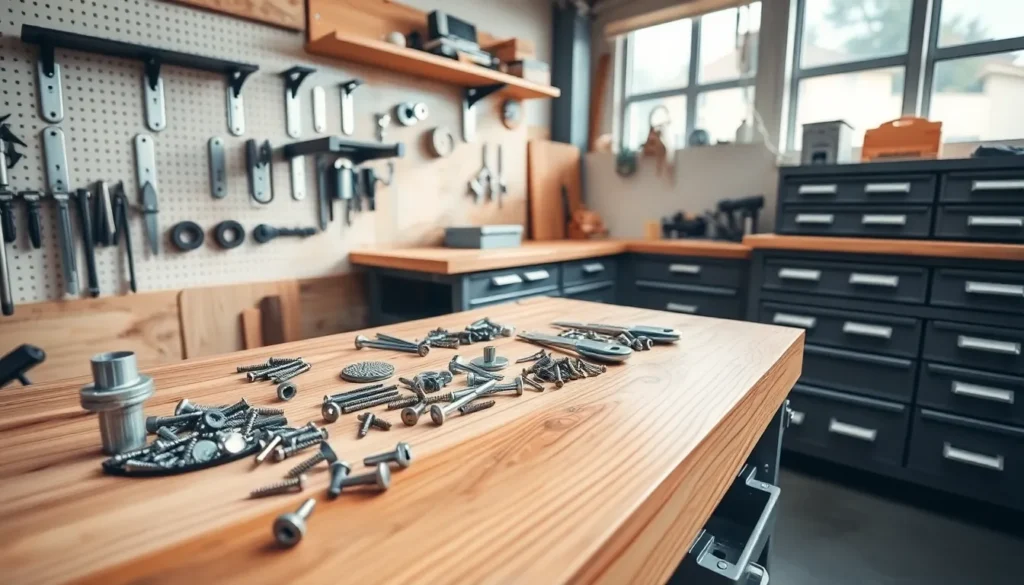
When it comes to crafting your perfect workspace, tool bench hardware is your unsung hero. Think of it like choosing the right shoes for a big dance: without the proper support, even the best moves can falter. From fasteners to storage solutions, understanding what tools to use can elevate your DIY game from amateur to pro. So buckle up as we jump into the nuts and bolts of tool bench hardware, where functionality meets style and a touch of humor.
Types of Tool Bench Hardware
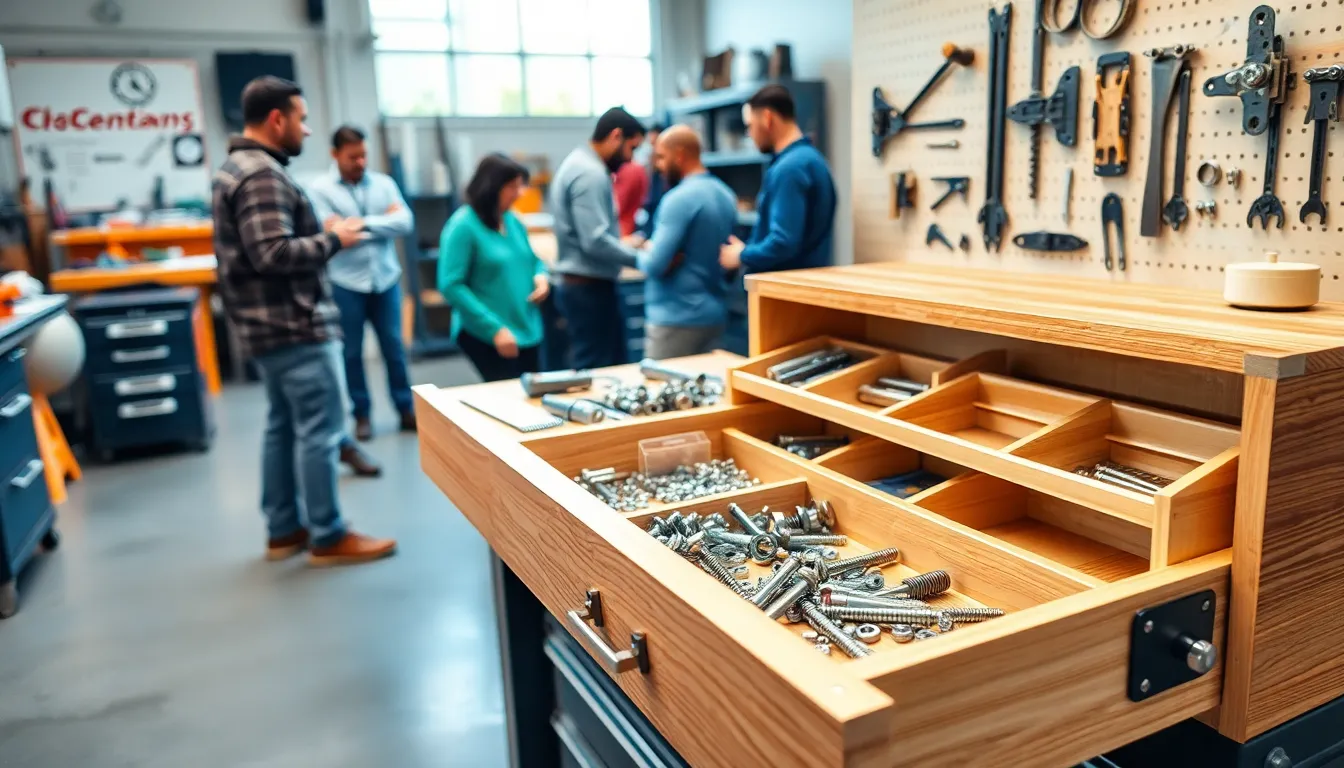
Tool bench hardware covers a vast array of items that are crucial for any project in the workshop. Here’s a closer look at some essential components:
Essential Fasteners and Connectors
Fasteners may seem mundane, but they’re the unsung champions of every tool bench. Screws, nuts, and bolts hold everything together. Consider using wood screws for wood projects or metal screws for more rugged setups. Aiming for the right size and type ensures your projects maintain structural integrity and performance over time.
Versatile Hinges and Brackets
Hinges and brackets add that much-needed flexibility to your workstation. They allow you to create moving parts (like doors or shelves) that still maintain strength. Heavy-duty hinges are perfect for workshop doors, while lighter models work well for cabinets. The right bracket can also be the difference between a rickety shelf and a sturdy one.
Drawers and Storage Solutions
A clutter-free workspace boosts productivity. That’s where drawers and storage solutions come into play. Choosing the right drawer slides and handles not only makes it easier to access your tools but also adds a touch of professionalism to your bench. Look for adjustable dividers to help keep everything organized, because nobody wants to rummage through a chaotic toolbox.
Choosing Quality Materials
Quality materials determine the longevity and reliability of your tool bench hardware. Here’s what to look for:
Common Materials Used in Tool Bench Hardware
Metal, wood, and plastic are the three main contenders for tool bench hardware materials. Metal offers the best strength and durability, while wood adds a professional touch. Plastic is lightweight and often more affordable, but it may not hold up under heavy use. Choosing the right material comes down to your specific project needs.
Evaluating Durability and Strength
Durability is key. Check the tensile strength of materials when making a selection. For instance, stainless steel screws resist corrosion better than their lesser counterparts. Always match the strength of your hardware with the demands of your projects. The last thing anyone wants is to discover their carefully crafted project collapsing under pressure.
The Importance of Finishes
Finishes play a crucial role in tool bench hardware. They can transform the appearance and functionality of your workspace.
Types of Finishes for Tool Bench Hardware
You may encounter various finishes, including powder coating, zinc plating, and even anodizing. Each type has its unique properties. Powder-coated finishes offer great protection and a smooth surface, while zinc plating is excellent for rust resistance. Anodizing, often used for aluminum, enhances corrosion resistance and durability.
How Finishes Affect Performance
Finishes don’t just affect aesthetics: they impact performance too. A high-quality finish can prevent wear and tear in high-use areas, ensuring that your hardware remains reliable for years. Consider the conditions your tools will face and choose a finish that meets those demands.
Installation and Maintenance Tips
Installation and maintenance of tool bench hardware aren’t as daunting as they seem. Follow these straightforward tips to ensure everything functions seamlessly.
Basic Installation Techniques
When installing hardware, it helps to ensure accurate measurements, using a level, and pre-drilling holes to avoid splitting wood. For metal projects, welding or riveting may be the way to go. Each type of hardware has its installation nuances, so consult manufacturer guidelines for specifics.
Routine Maintenance Practices
Maintenance is often overlooked but can extend the life of your hardware significantly. Regularly check connections, tighten screws, and inspect for rust or wear. A quick wipe-down with a cloth can stave off dust accumulation. For sliding drawers, keeping tracks clean prevents jams and ensures smooth operation.


